Destination Guide
The Complete Yosemite Elopement Guide
Permits, marriage license steps, weather by month, best viewpoints, and everything else we wish every couple knew, from photographers who’ve actually eloped a couple here.
In This Guide

We're Dan & Laura Pinckard
A husband-and-wife elopement photography and planning team, here if you want help planning your Yosemite day.
Quick Facts
- Best season: May for peak waterfalls, though high-country roads often aren't open yet — check current status before counting on both
- Permit required: yes, but parties under 11 people are exempt from the designated-site list (except meadows/riparian areas)
- Permit cost: $150 base fee (non-refundable), plus $50/hour for gatherings of roughly 30–50+ people
- Apply: up to a year ahead, and at least 21 days before your date
- Marriage license: Mariposa County Clerk, no waiting period, valid 90 days — public and confidential licenses have different eligibility rules
- Terrain: from a flat roadside pullout to a strenuous 9.6-mile round-trip hike, depending on the spot
- Entrance: as of 2026, no day-use reservation required — this has changed before, so confirm current status
- Getting there: Fresno Yosemite International (FAT) is the closest major airport, about 1.5–2 hours from the Valley
Why Elope in Yosemite
Yosemite gives you granite walls that go up thousands of feet, waterfalls you can hear before you see, and a handful of viewpoints that genuinely do look like the postcard. It’s one of the few places where the landscape itself is dramatic enough to be the whole ceremony backdrop, no additional styling required.
You don’t need to be an experienced hiker for this to be the right fit. Some of the best viewpoints in the park, including Tunnel View and much of Yosemite Valley, are a short walk from a parking area. Others, like Taft Point or Glacier Point via trail, ask a little more of you, but nothing beyond a normal, unhurried hike in real shoes. We’ll help you pick a spot that actually matches your comfort level, not just the one with the most likes on Instagram.
Permits & Legal Requirements
Yes, every wedding ceremony held anywhere in Yosemite requires a National Park Service wedding permit, unless your party is fewer than 11 people. That’s a genuinely useful exception: with a small enough group, you’re not restricted to the designated ceremony-site list below, except in open meadows and riparian environments, which stay off-limits regardless of group size.
Designated ceremony sites
For larger parties, or for the certainty of a confirmed site, NPS maintains 12 designated wedding locations, each with its own capacity and seasonal rules:
- Cascades Picnic Area — up to 30, year-round
- Lower Yosemite Fall Paved Trail — up to 50, year-round except holiday weekends
- Swinging Bridge Picnic Area — up to 20
- Cathedral Beach Picnic Area — up to 50, closed November through Memorial Day, staff monitoring required above 35
- Sentinel Beach Picnic Area — up to 100, closed November through Memorial Day
- Bridalveil Fall — up to 50
- Glacier Point Amphitheater — up to 50, available the Tuesday after Memorial Day through September 30 only, with no weddings scheduled in July or August
- Chilnualna Falls Trailhead Lot — up to 50
- Tenaya Lake Beach — up to 50, available once the road opens for the season through September 30
- Tuolumne Meadows Lodge Area — up to 25
- Tuolumne Grove — up to 30, a 2.5-mile hike in
- Merced Grove — up to 30, a 3-mile hike in
Taft Point, Sentinel Dome, Olmsted Point, and Tunnel View are not on this list. For a small elopement under 11 people, that’s not a problem thanks to the exemption above. For a larger gathering, the ceremony itself needs to happen at one of the designated sites, even if you take photos elsewhere.
The permit process
- Base fee: $150, non-refundable, whether or not your date ends up needing to change.
- An additional $50/hour event-monitor fee applies for larger gatherings, roughly 30–50 people and up.
- You can apply as early as a year in advance, and must submit your application at least 21 days before your date.
- Ceremonies are limited to 2 hours, with a 60-decibel sound cap (so no amplified music).
- Chairs, tables, and decor beyond a handheld bouquet or boutonniere generally aren’t permitted.
- Permits aren’t issued for holidays or holiday weekends.
Current park entrance status
As of 2026, Yosemite does not require a separate day-use entrance reservation — the standard entrance fee applies. This has changed in past years and could change again, so check nps.gov before you finalize plans that assume no reservation is needed.
Getting your marriage license
Yosemite Valley falls under Mariposa County. Both license types require an in-person appointment and photo ID showing your date of birth, and are valid for 90 days from issue.
- Public license ($60): the standard option. Requires one witness to sign (up to two may sign), and someone legally authorized to solemnize the marriage.
- Confidential license ($65): has real eligibility requirements beyond the price — both of you need to be 18 or older, unmarried, and already living together as spouses. If it’s issued in Mariposa County, your ceremony also needs to take place in Mariposa County. No witness signs a confidential license.
- After your ceremony, the completed license needs to be returned to the Recorder’s office (public) or Clerk’s office (confidential) within 10 days.
Best Time of Year to Elope in Yosemite
May is excellent for waterfalls and the Valley itself, but don’t assume the high country is open yet. Tioga Road and Glacier Point Road typically open sometime between late May and June, with plowing usually starting around April 15 — the exact date shifts significantly every year with snowpack, and NPS deliberately avoids giving a fixed range because of it. Peak waterfall flow and full high-country access don’t reliably overlap at the start of that window.
- March–April: waterfalls building toward peak flow, crowds still thin, high country not yet accessible. Weather can be unpredictable.
- May–June: peak waterfall flow in the Valley; high-country roads typically open somewhere in this window, but check current status rather than assuming.
- July–August: hot, often 82–90°F in the Valley. Waterfalls fade and can run dry by mid-August. Wildfire smoke risk rises from late July through September.
- Fall: lighter crowds and clear, crisp views of the granite.
- Winter: the quietest season, though high-country roads close for the season, typically by mid-to-late October. February brings the Horsetail Fall “firefall” effect, when the setting sun lights the waterfall in a way that looks like flowing lava, if conditions line up.
Source: NPS – Tioga Road Status
Weather & What to Expect
Elevation changes everything here. Yosemite Valley sits around 4,000 feet, while spots like Glacier Point climb to roughly 7,200 feet, so pack for both: it can be warm on the Valley floor and noticeably cooler and windier up top, even on the same day. Mornings and evenings are cold at any elevation for most of the year.
The Valley’s granite walls also affect your light. Because the walls are so steep, direct sun disappears from parts of the Valley floor earlier than you’d expect, and some spots stay in shadow longer in the morning. We plan around this when we’re scouting your timeline, so golden hour actually happens when you’re somewhere it can reach you.
Best Locations
We’ve personally photographed elopements at Taft Point and in Yosemite Valley. The rest of these are spots we know well and would gladly help you plan around, whether or not we’ve stood there with a couple yet.
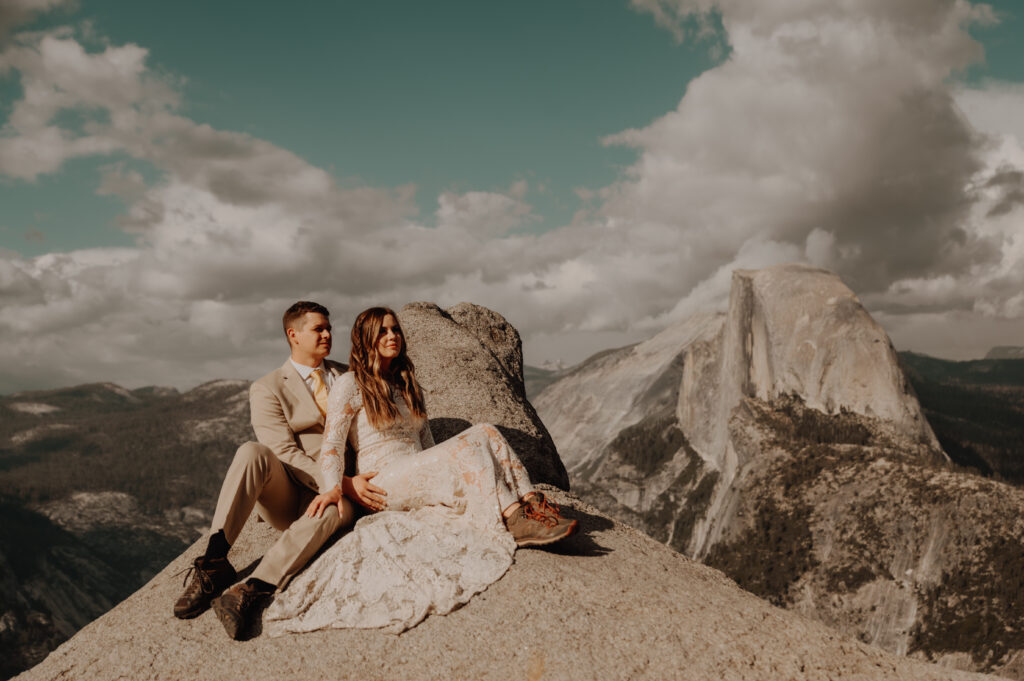
Taft Point
Easy · ~2.2–2.4 miles round trip · 200–360 ft gain · Not a designated ceremony site — ceremony-eligible only under the under-11-person exemption · We’ve shot here
Dramatic fissures cut right into the cliff edge, with an enormous, unobstructed canyon view and a fraction of the crowd you’ll find at Glacier Point. It’s one of our favorite spots in the entire park. For a small elopement under 11 people, you can hold your ceremony right here; for a larger gathering, this becomes a photo location and the ceremony itself would need to move to one of the designated sites.
Yosemite Valley
Easy, mostly flat · We’ve shot here
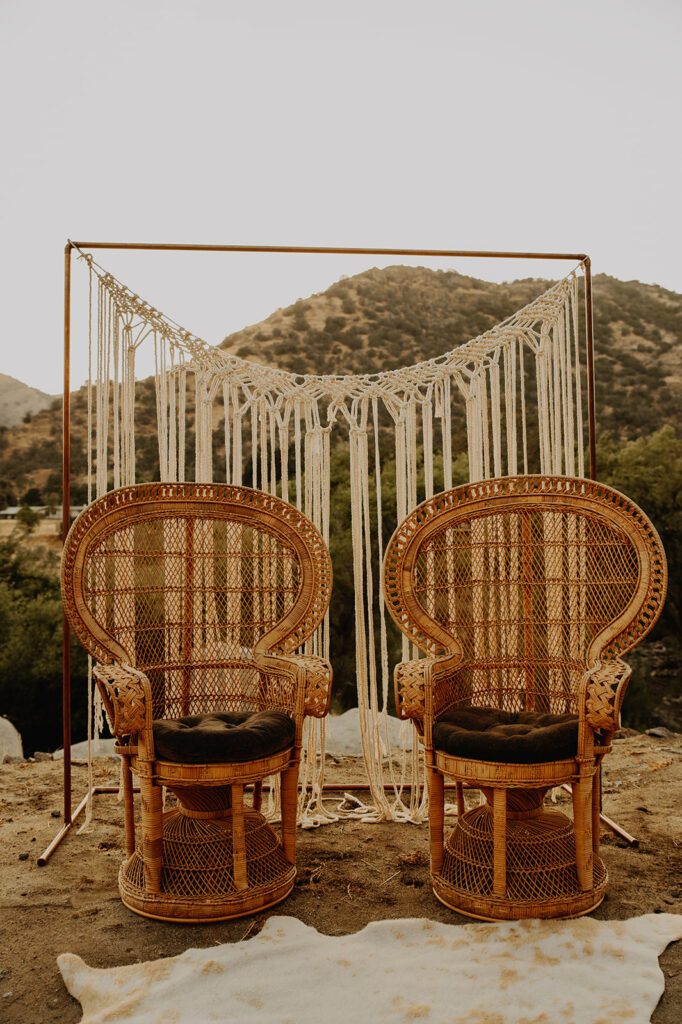
The Valley floor puts El Capitan, Half Dome, and Yosemite Falls all within reach of a short walk. For a ceremony, this needs to be a specific non-meadow spot, not “the Valley” generically — several of its most scenic meadows are off-limits for ceremonies even under the small-party exemption. We’ll help you pick the right exact location.
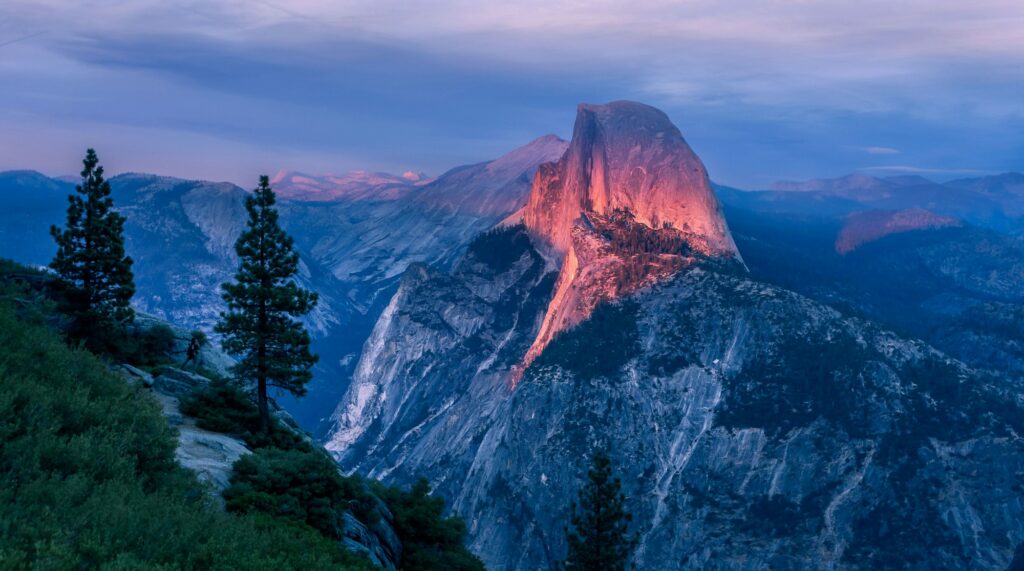
Glacier Point
Designated ceremony site (Amphitheater only) · Available Tuesday after Memorial Day through September 30, no weddings in July or August · Cap 50 · Drive-up accessible (seasonal road), or the Four Mile Trail: 4.8 miles one-way / 9.6 miles round trip / ~3,200 ft gain, strenuous
The classic, straight-on view of Half Dome, and one of Yosemite’s actual designated wedding locations, not just a scenic overlook. It comes with real seasonal limits: the Amphitheater is only available roughly Memorial Day through September, and NPS doesn’t schedule weddings there at all in July or August. Glacier Point Road is also seasonal and frequently still closed into late spring, so this location depends on timing in more than one way.
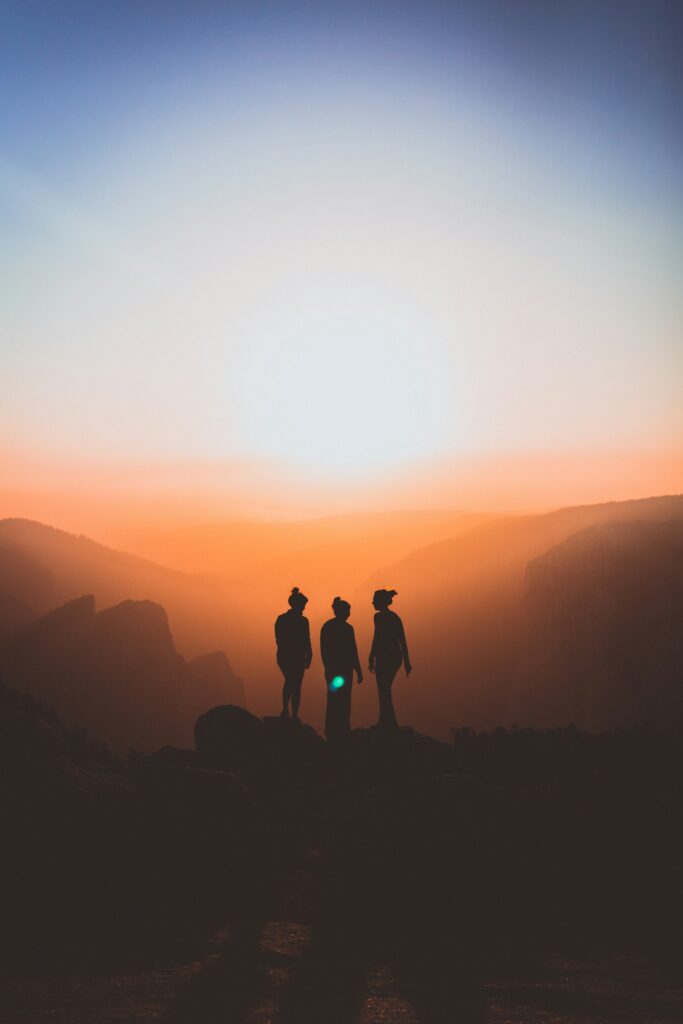
Sentinel Dome
Moderate · ~2.2 miles round trip · 459 ft gain · Not a designated ceremony site — ceremony-eligible only under the under-11-person exemption
A genuine 360-degree summit view for a relatively short hike, without the crowds Glacier Point draws. A great option if you want a real hiking moment together without an all-day commitment, and for a small elopement, it works as your actual ceremony spot too.
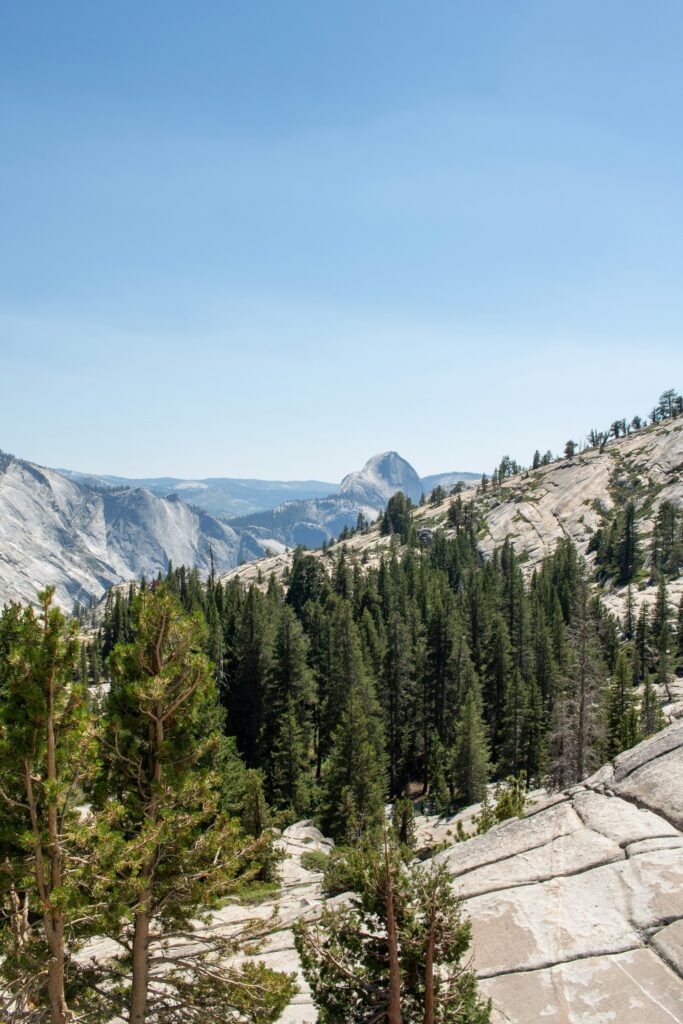
Olmsted Point
Easy · ~0.25 miles round trip · ~100 ft gain · Only reachable when Tioga Road is open · Not a designated ceremony site — ceremony-eligible only under the under-11-person exemption
Sweeping granite wilderness views over Tenaya Canyon toward Half Dome, with almost no effort required to get there. The tradeoff is timing: this only works while Tioga Road is open, and the opening date varies by year — don’t lock in a date here without checking current road status first.
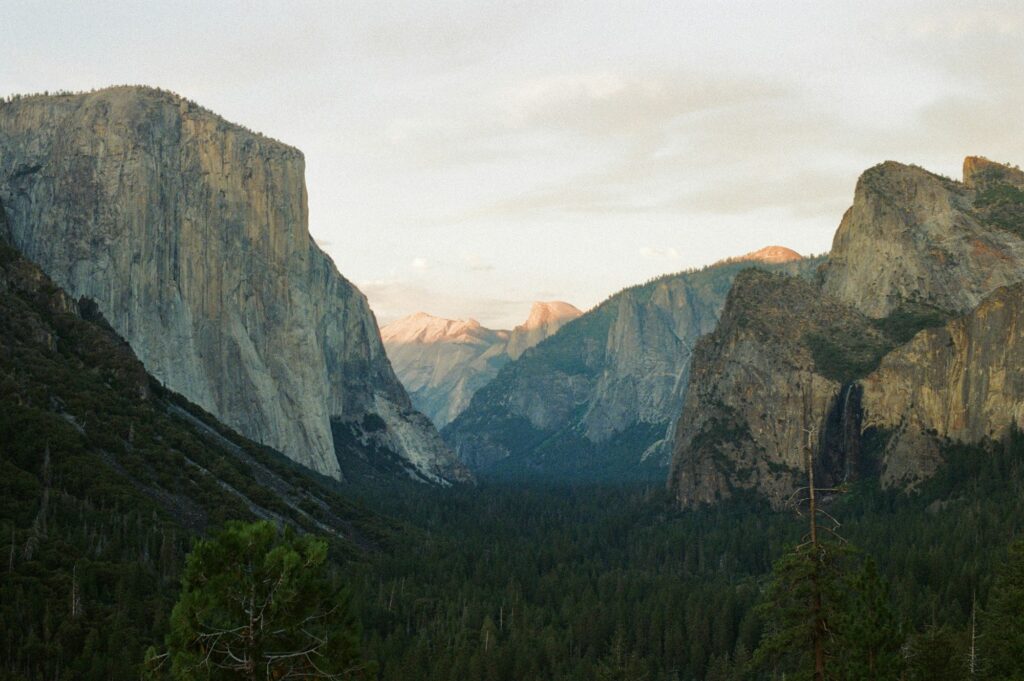
Tunnel View
No hike required, roadside pullout · Not a designated ceremony site — ceremony-eligible only under the under-11-person exemption
The classic postcard shot: El Capitan, Half Dome, and Bridalveil Fall in a single frame, with essentially zero logistics involved. A strong choice if you want minimal effort and maximum reliability, though it’s also the most crowded viewpoint in the park at sunrise and sunset.
Cathedral Beach Picnic Area is a quieter alternative that’s actually one of NPS’s designated wedding sites, not just a photo spot: capacity up to 50, closed November through Memorial Day, with staff monitoring required above 35 people. Worth considering if you want the certainty of a confirmed designated site without the crowds of Glacier Point.
Terrain & Accessibility
Tunnel View and most of the Valley floor are accessible from paved pullouts or short, flat paths, no real hiking required. Taft Point and Sentinel Dome are genuine hikes but stay under 2.5 miles round trip on moderate terrain. Glacier Point via the Four Mile Trail is the most demanding option on this list at around 9.6 miles round trip and roughly 3,200 feet of gain, though the drive-up road (when open for the season) removes the hike entirely.
Whatever you choose, wear real shoes you can hike in, not just ones that look good in photos, and dress in layers. Temperatures swing more than you’d expect between the Valley floor and the higher viewpoints, especially in the hour before sunrise or after sunset.
Where to Stay
- In the Valley: Yosemite Valley Lodge (mid-range) or The Ahwahnee / Majestic Yosemite Hotel (historic and luxury)
- Near the park: Tenaya at Yosemite in Fish Camp, a full-service resort about an hour from the Valley
- Gateway towns: Mariposa (budget to moderate), Oakhurst (the most services and dining), or Groveland (small-town, fewer options)
Sample Itinerary
One-Day Elopement: arrive early for soft morning light at Tunnel View or the Valley floor, rest and get ready mid-day, then hike to Taft Point for a golden-hour ceremony and photos as the light drops into the canyon.
Three-Day Elopement: Day one, arrive and explore the Valley floor as you settle in. Day two, your ceremony at Taft Point or Glacier Point, with the rest of the day built around wherever the light takes us. Day three, sunrise at Sentinel Dome before you go, or, if the timing works, continue on to Sequoia National Park, about a three-hour drive away, for a second chapter of the trip. We’ve actually photographed that exact combination before.
See how these map to our One-Day and Three-Day Elopement experiences, or read about a real trip like this one below.

A Real Yosemite Elopement
Kenzi and Tyler eloped across two days in Sequoia and Yosemite, hiking to Taft Point for their ceremony. Their real story, real timeline, and real photos are a good look at what a trip like this can actually feel like.
FAQ
It depends on your group size. If your party is fewer than 11 people, you’re not restricted to the designated ceremony-site list (except open meadows and riparian areas), though you still need the standard wedding permit: a $150 base fee, non-refundable, plus $50/hour for larger gatherings of roughly 30–50+ people.
NPS maintains 12 designated wedding locations, including Cathedral Beach Picnic Area and the Glacier Point Amphitheater, each with its own capacity and season. Taft Point, Sentinel Dome, Olmsted Point, and Tunnel View aren’t on that list — they work for a ceremony only under the under-11-person exemption, or as photo locations if your ceremony happens at a designated site instead.
From the Mariposa County Clerk’s office. There’s no waiting period, and licenses are valid for 90 days. The public license ($60) requires one witness; the confidential license ($65) requires both of you to be 18+, unmarried, and already living together as spouses, and if it’s issued in Mariposa County your ceremony needs to happen there too. Either way, the completed license needs to be returned within 10 days of your ceremony.
Most couples choose May for the waterfalls, but the high country (Tioga Road, Glacier Point Road) often isn’t open yet that early — both usually open sometime between late May and June, and the exact date shifts every year with snowpack. Fall offers lighter crowds and clear views; winter is quiet but closes the high-country roads.
No. Several of the best viewpoints, including Tunnel View and most of Yosemite Valley, are reachable from a short, flat walk. Others, like Taft Point or Sentinel Dome, are real but moderate hikes under 2.5 miles round trip.
Yes, within what your permit and location allow. Bringing your party to 11 or more changes which locations are available to you, since you’d then need one of the designated ceremony sites, so it’s worth settling your guest list early.
Yes. We’ve personally photographed an elopement at Taft Point and in Yosemite Valley, and we’d love to help plan yours. Start your inquiry here.
As of 2026, no — Yosemite doesn’t currently require a day-use entrance reservation, just the standard entrance fee. This has changed in past years, so confirm current status on nps.gov as your date approaches.
Ready to Start Planning Your Yosemite Elopement?
Tell us what you’re picturing, even if it’s just a general feeling or a specific viewpoint you’ve had in mind for a while. We’ll help you shape the rest.
Sources: NPS – Yosemite Wedding Locations · NPS – Yosemite Weddings · Mariposa County Clerk · NPS – Tioga Road Status
Planning rules can change. Last fact-checked: September 11, 2026. NPS and the Mariposa County Clerk remain the final authority — confirm before finalizing your date.